


Your Harley's trade-in value comes down to five things: model and year, mileage, mechanical and cosmetic condition, documented service history, and current local demand for that specific bike. Modifications, contrary to what most owners expect, usually add little and can subtract. The fastest way to a real number is an in-person appraisal, because condition is the largest variable and it cannot be assessed from a form.
Here is what an appraiser is actually looking at, and what you can do before you bring the bike in.
What determines a Harley's trade-in value?
Model, year, and configuration
The starting point. Touring models and trikes generally hold value strongly. Certain models have devoted followings that keep demand high years after production ended. Others are simply harder to move. This part is out of your control and it sets the range everything else adjusts within.
Mileage
Mileage matters, but less than owners assume and less than it does with cars. Harley big twins are built for long distances, and a documented high-mileage bike can appraise better than a low-mileage bike that sat. What hurts is the combination of high miles and no records.
Condition, mechanical and cosmetic
Usually the largest swing factor, and the one you have the most influence over. This covers tires, brakes, fluids, chrome and paint, seat, controls, and whether everything works. A bike needing tires and brakes gets appraised with those costs deducted, because the dealer has to put them on before reselling it.
Service history
Documented, dated maintenance raises value in a way most owners do not expect. It tells the appraiser the bike will not become a problem on the lot. If you have receipts, bring them. If your service was done at our Service department, we already have the history.
Local demand
Value is regional. South Louisiana rides essentially year-round, which supports steadier demand than a market with a hard winter. Bagger and trike demand is strong here. That is part of why an appraisal from a local dealer can differ from a national valuation tool.
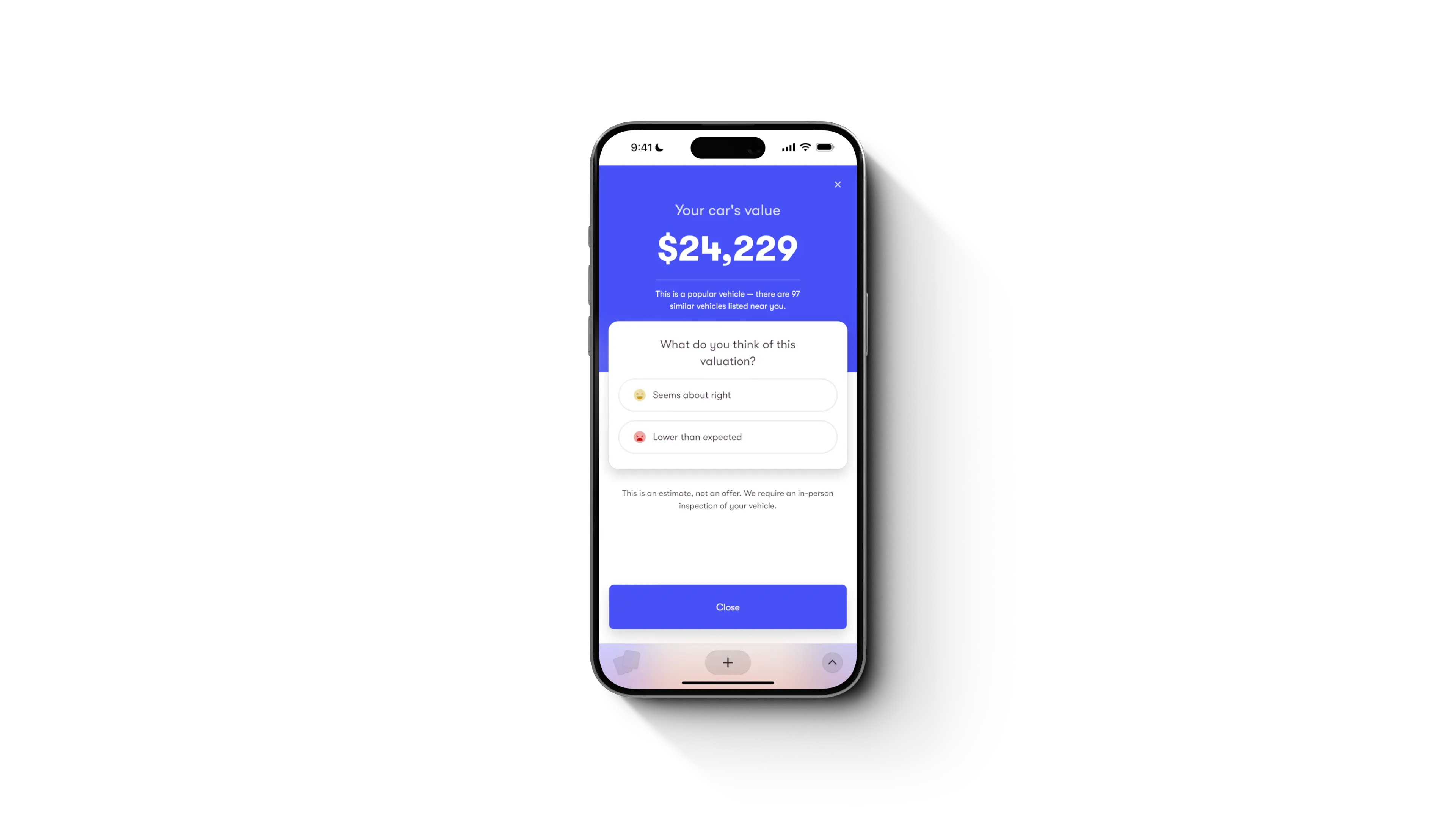
What's your bike worth?
Get an estimate of your bike's trade-in value, based on real local market data — in under 30 seconds.
Powered by

Do modifications increase a Harley's trade-in value?
Usually not as much as you spent, and sometimes not at all. This is the hardest conversation in an appraisal, so here it is honestly.
Custom parts are personal. Ape hangers, a loud exhaust, a specific paint scheme, or a solo seat delight the owner and narrow the pool of buyers who want the bike as-is. The dealer has to sell it to someone else, and if the modifications are polarizing, that is harder, not easier.
What tends to help:
- Quality luggage, windshields, and touring accessories that broaden usability
- Professionally installed and properly tuned performance work with documentation
- Comfort upgrades like a good seat or highway pegs
- Genuine Harley-Davidson accessories, generally more than aftermarket equivalents
What tends to hurt:
- Heavily personalized paint or graphics
- Extreme ergonomics that only fit one rider's body
- Performance modifications with no tune and no paperwork, which read as a liability
- Removed or discarded original parts
If you still have the stock parts, keep them and bring them. The ability to return a bike to stock is worth real money, and owners throw those boxes away all the time.
The South Louisiana factor
Two things about our climate affect appraisals here that would not come up in Arizona.
Humidity and salt air. Corrosion is the most common condition deduction we see on locally owned bikes. It shows on fastener heads, under the pipes, on electrical connectors and grounds, and inside wheels. A bike garaged in Lafayette and a bike stored outdoors closer to the coast can have identical mileage and appraise very differently.
Storm and flood history. A bike with any flood exposure is a different transaction, and it does have to be disclosed. Water intrusion affects electrical systems and bearings in ways that surface later. If your bike has been through high water, say so up front. It affects the number, and finding out afterward is worse for everyone.
The good news on the other side of the ledger is the year-round riding season. Demand for used bikes does not go dormant here the way it does further north, which supports values through months when a northern dealer would be discounting.
How to get more for your trade
Straightforward, high-return steps before the appraisal:
- Clean it properly. Not a rinse. Detail it, including the parts nobody sees. A clean bike signals a cared-for bike, and appraisers are human.
- Gather every service record. Receipts, invoices, the owner's manual with the maintenance log filled in.
- Fix cheap, visible things. A burned-out bulb, a dead battery, a torn seat seam, a missing mirror. Small items read as neglect and cost more in perception than in parts.
- Bring the stock parts if the bike is modified.
- Bring both keys and the security fob if applicable. Missing keys cost money to replace.
- Do not do major work right before trading. You will rarely recover the cost of new tires or a big service in the trade number. Let the dealer absorb that.
That last one surprises people, but it is true. Spend money on cleaning and paperwork, not on parts. If the bike is already in a shop for work you have committed to, talk to us before you settle that bill.
Trade in or sell it yourself?
A private sale usually produces a higher gross number. A trade is faster, involves no strangers at your house, no title paperwork on your end, and no waiting.
There is also a tax consideration that closes part of that gap. Louisiana calculates sales tax on the purchase price minus your trade-in allowance, not on the full price of the new bike. Trade a bike valued at $10,000 against a $30,000 purchase and tax is assessed on $20,000. What you keep is your combined state and local sales tax rate applied to that full $10,000 of trade allowance, which is real money on a purchase that size. Sell privately and pay cash instead, and you give that saving up. It is worth putting real numbers to before you decide, because it often narrows the difference more than people expect.
Selling the bike to us outright is a third option, and the number works differently. We do buy motorcycles without you buying anything, and that is the right call if you simply want the bike gone. Expect an outright offer to land below a trade-in figure on the same bike, and expect the gap to vary with condition and with demand for that model. The reason is straightforward: a trade is part of a purchase, so there is more room in it, and we would rather you leave on another bike than leave with a check. If you are buying anyway, the trade is where the stronger number is. If you are not, start at we buy used motorcycles.
The practical answer for most people: if you are buying another bike anyway, get a trade number and compare it against what you would realistically net privately, after the hassle. Often it is closer than expected.
Get a real number
Online valuation tools give you a range built from national data. They cannot see your tires, your corrosion, your service records, or what is selling on our floor this month. Use them for a ballpark, then get an actual appraisal.
You can start a trade valuation on our site, or bring the bike to us in Scott and we will look at it with you and explain the number rather than just handing it over.
Frequently asked questions
How much is my Harley worth?
It depends on model, year, mileage, condition, and service history, and the range for any given model is wide. Online tools give a national estimate. A local appraisal gives you a number you can actually transact on, because it accounts for condition and for what is in demand in this market.
Does Harley-Davidson buy back motorcycles?
Yes. We buy motorcycles outright, whether or not you are buying something from us, including other brands and bikes that are not currently running. Expect an outright purchase offer to come in below what the same bike would bring as a trade, and expect the gap to vary with condition and demand. The trade number is the stronger one because a trade is attached to a purchase, and we would rather you leave on another bike. Outright buying is a separate process with its own page: we buy used motorcycles.
Do I need to pay off my loan before trading in my Harley?
No. We pay off the existing loan and roll the balance into your new financing. That works even when you owe more than the bike is currently worth, though it does increase what you finance. If the bike is worth more than you owe, that equity goes toward your purchase instead. Bring your current payoff amount to the appraisal. See our financing page.
Will high mileage kill my trade value?
Less than you think, if the service history backs it up. Harleys are built for miles. What suppresses value is high mileage with no documentation, or deferred maintenance that the next owner will inherit.
Should I fix my Harley before trading it in?
Fix cheap cosmetic items and anything that is simply not working. Do not put new tires, a big service, or major repairs into it expecting to get that money back in the trade number. You generally will not. If the bike is already in a shop for work you have committed to, ask us before you pay the bill. We take trade-ins straight out of our service department regularly, and in many of those deals we pay that outstanding shop bill as part of the trade.
How long does a trade appraisal take?
You leave with a real number the same visit. How long it takes depends on the bike and on how busy the store is that day, so we would rather not put a stopwatch on it, but this is not a process that runs into days or ends in a callback.
Do I need an appointment for an appraisal, or can I walk in?
Walk-ins are welcome any time. It works much like our service department: with an appointment you are usually in and out quicker, while a walk-in gets in line and waits their turn. If your day is tight, call ahead at (337) 289-3030 and set a time.
Bring it by
We appraise Harleys and other makes at our store in Scott, right off I-10 between Lafayette and Crowley. Riders come to us from Lake Charles, Baton Rouge, Houma, New Iberia, and out toward New Orleans, and we are glad to give you a number even if you are still deciding.
Start your trade valuation, see what you would be trading into, or call (337) 289-3030. We are at 724 I-10 South Frontage Rd, Scott, LA 70583.